business——Kan
Get Your Hands Dirty With Data Before AI Can Help
Over the past few months, a number of business owners have reached out to me asking for help building solutions to specific problems — a slip-verification system for adding people to groups, a KPI-tracking system for chat admins, various booking systems. Even I had to build a backend system to handle the flow of customers messaging in about products.
These problems don’t show up on Day 1 of starting a business. They tend to surface around Day 30 or Day 60 — once you start “getting your hands dirty” from collecting data over and over again.
Tracking admin workload (too few admins, can’t keep up) Tracking platform statistics (failed payments, fake slips) Tracking customer complaints (slow replies, “when will my order arrive?”)
A lot of this data doesn’t surface all at once. We end up fixing things one at a time — like patching leaks, bit by bit, until they finally stop.
These “leaks” can show up anywhere in a business system, such as:
- Accounting — losses or shrinking margins
- Customer experience — slow replies, failed purchases
- Operations — wrong shipments, late deliveries
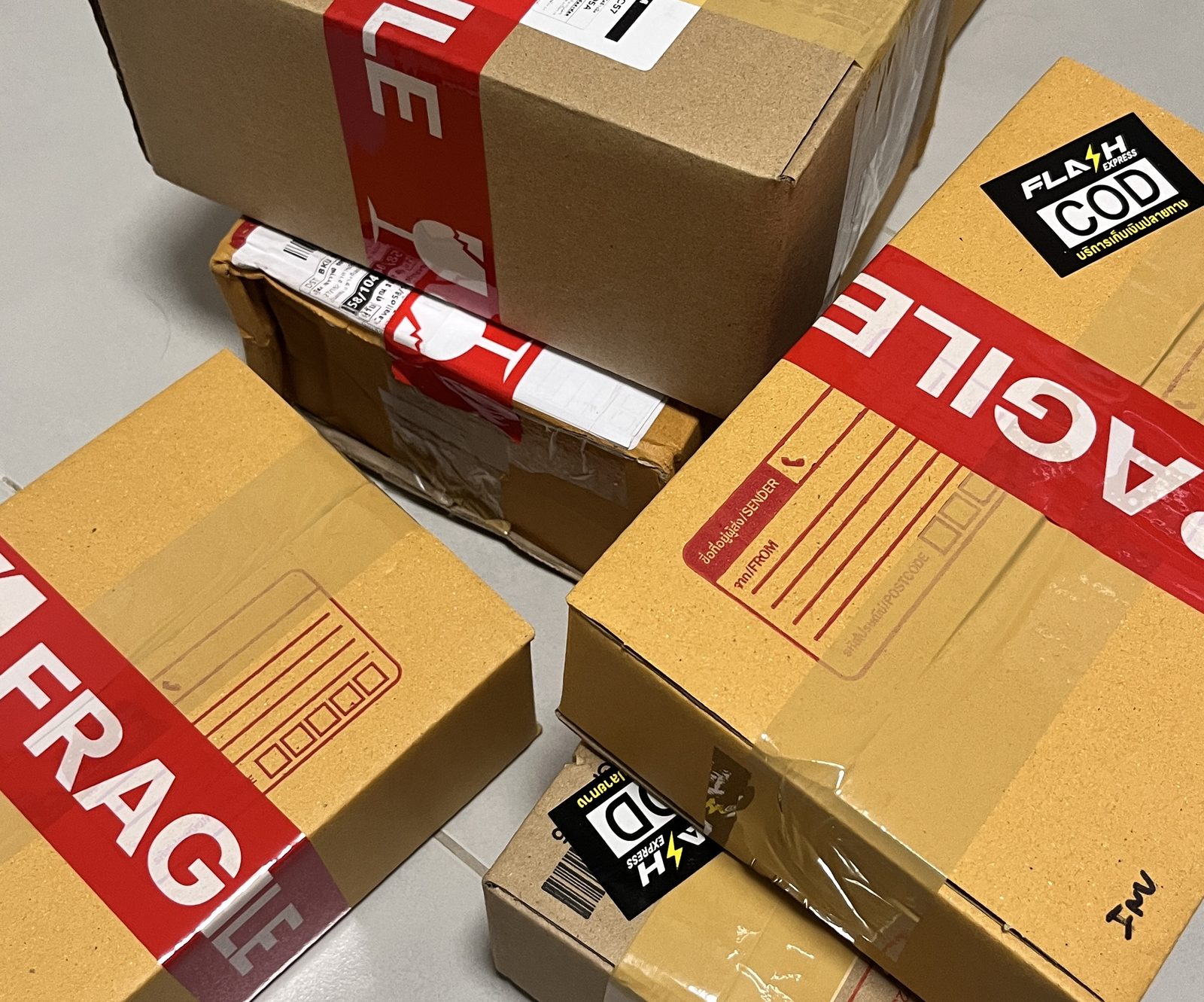
At that point, you have to find a way to patch each leak. And most of the time, they have knock-on effects — shipping and packaging costs rise, which eats into profit (Operations → Accounting). Not enough admins leads to unhappy customers (Operations → Customer Experience).
Now, if we have enough data, we can soften these impacts.
Here’s a fresh example from something I dealt with recently: shipping costs. I compared shipping rates across 3 courier companies in 2 locations. I took sales data — like cash-on-delivery totals, shipping fees, and box sizes — and fed it to Claude to analyze which courier and branch would be the best fit.
The conclusion: if the box doesn’t exceed a certain size, ship with this company at this branch. If it’s bigger, go with this other company at a different branch instead. I then compared delivery quality and how fast payments landed in the account — and from that got a clear answer for the logistics leak.
Next, I tackled marketing — analyzing order volume against video posting patterns (clip length, posting time). That led to a trick: don’t focus on quantity when posting clips, focus on quality — which ended up boosting the platform’s view count.
It’s clear that everything comes back to having data to analyze your system.
So, can AI give advice on all this? I’d say — partially, but not accurately.
Here’s the thing: AI or machine learning gets smarter the more data you feed it to learn from. If you only have 5 data sets, the results won’t be nearly as accurate as if you already had 100.
That’s exactly why a good solution might not start on Day 1. You need to get your hands dirty with enough ‘data’ first before you can build something sustainable.