Finance——Kan
Fintech Specialization Course Recap
Wanting to broaden my understanding of the fintech world, I enrolled in the Financial Technology (Fintech) Innovations Specialization on Coursera. This specialization track is made up of 4 sub-courses:
-
The Future of Payment Technologies
-
Blockchain and Cryptocurrency Explained
-
Raising Capital: Credit Tech, Coin Offerings, and Crowdfunding
-
Innovations in Investment Technology: Artificial Intelligence
1st Course: The Future of Payment Technologies
The first module covers the evolution of payment methods, explaining how different payment systems work — starting from financial intermediaries, traditional check systems, and Automated Clearing House (ACH) systems. It then gives examples of how the process can be made more reliable and efficient, leading to e-wallets like PayPal. However, money sitting in an e-wallet is useless without an incentive to use it, such as earning interest — so bringing financial partners into the e-wallet ecosystem helps drive more people to adopt e-wallets. That’s where Ant Financial Group comes in, offering users a wide range of options.
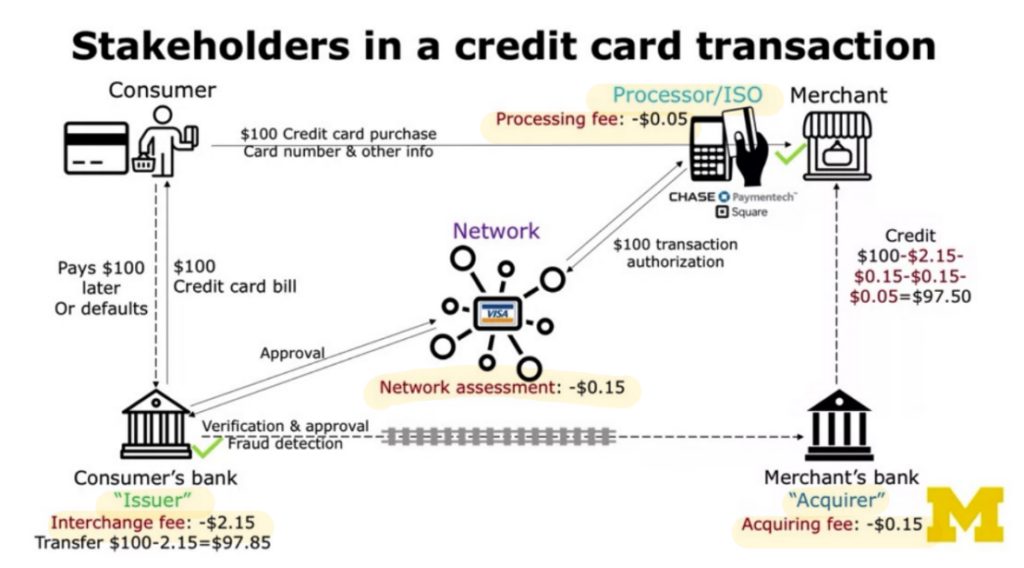
In the second module, the instructor discusses the credit card ecosystem, where fund settlement involves more parties — both the cardholder’s bank (the issuer) and the merchant’s bank (the acquirer).
What’s interesting is how the course highlights credit card security, pointing to the importance of encryption throughout the flow of transaction data.
Payment Technologies summary sheet
2nd course: Blockchain and Cryptocurrency Explained
Blockchain technology has grown significantly in recent years — not just Bitcoin, but the concept itself. This course dives into the mechanics behind blockchain, its data structure, and its benefits.
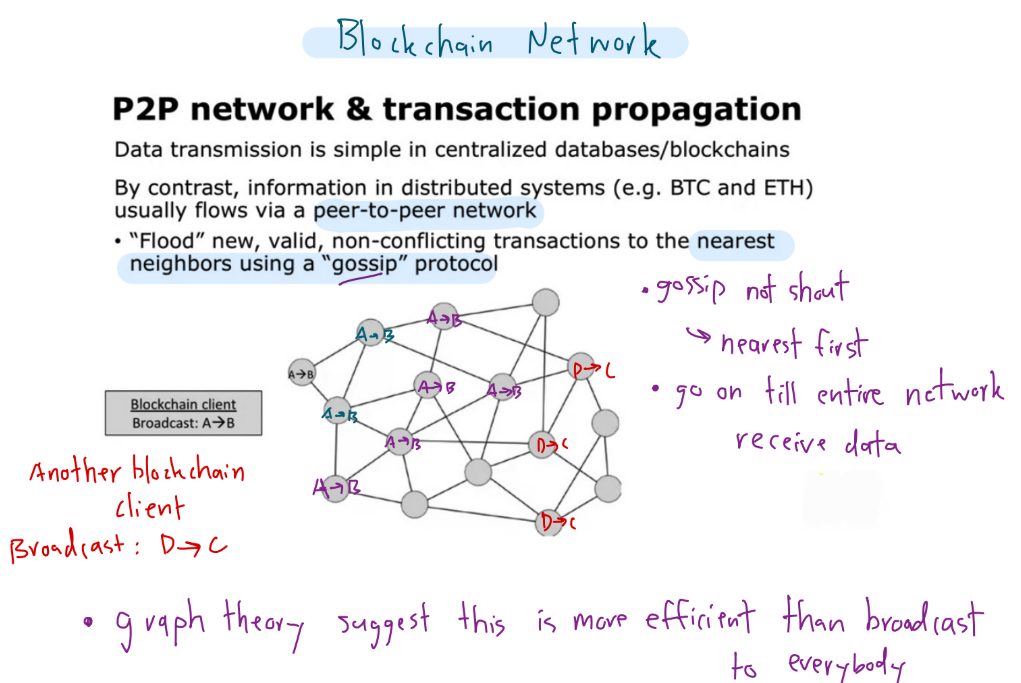
From there it moves into the most popular cryptocurrency, Bitcoin, which records verified payment transactions through a Proof-of-Work system, where participating nodes (miners) earn coin-creation rights and transaction fees. However, this process requires significant computing resources.
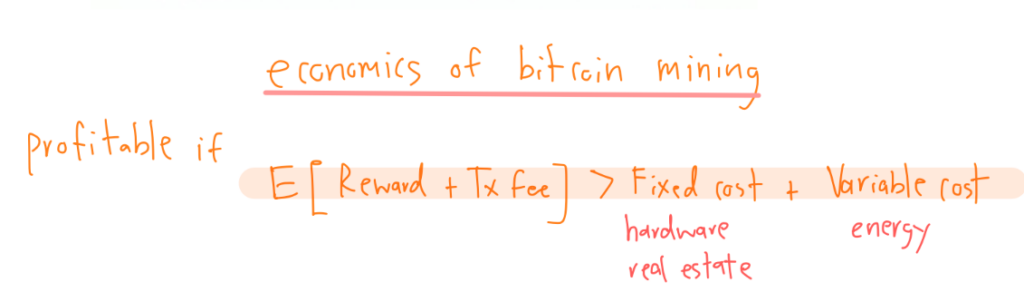
Instead of investing in hardware and energy, wealth can be measured through a ‘Proof-of-Stake’ system — staking collateral assets or coins into the system in exchange for the right to verify and confirm transactions, which is far more energy-efficient and turns miners into direct stakeholders. This concept is used in Ethereum, and the course explains what a smart contract is.
The third part covers how blockchain businesses operate, exchanges, wallet and key management, and the risks associated with crypto assets.
3rd course: Raising Capital - Credit Tech, Coin Offerings, and Crowdfunding
Fundraising isn’t limited to offline channels anymore — today’s fintech can collect personal data and use algorithms to approve loans.
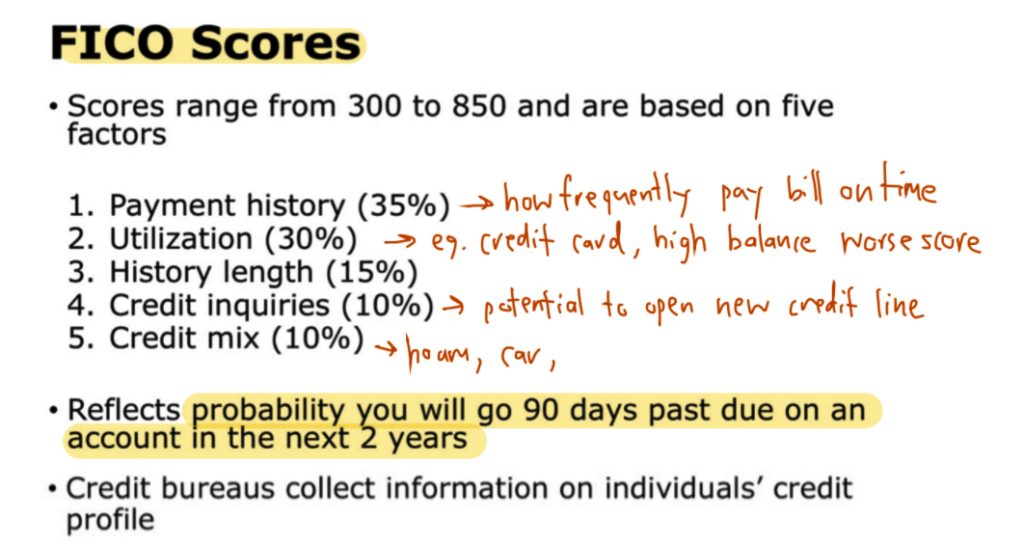
The first module explains credit tech through the relevant financial equations, referencing expected loss given default and techniques for mitigating default impact, such as collateral and installment payments. It then covers the importance of the FICO® Score before connecting it to regression analysis.
The course wraps up with the various forms of crowdfunding: reward-based, equity-based, and crypto-based (ICO).
4th course: Innovations in Investment Technology - Artificial Intelligence
The final part covers asset allocation and compares the pros and cons of traditional financial advisors (FA) versus robo-advisors.
In asset allocation, expected returns, standard deviation, and correlation are all considered for effective portfolio management.
It then shows how those factors relate to fundamental analysis, which fund managers use to screen stocks based on performance and fees.
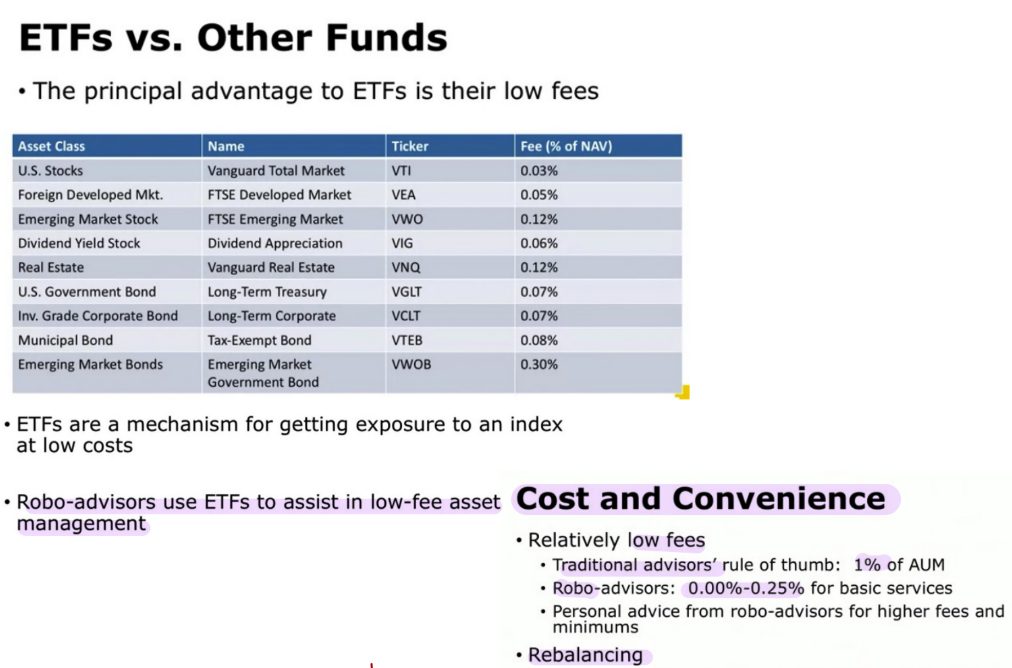
ETFs themselves count as a form of fintech, selecting stock weightings via value weighting, with lower fees compared to actively managed funds.
Finally, the course explains how machine learning is applied to analyzing stock data to determine buy/sell points for robo-advisors.
*>>> Summary notes for personal use only. For easy-digest academic reading <<<*